 EN
EN  ES
ES  DE
DE  FR
FR  PL
PL  IT
IT  RU
RU  PT
PT 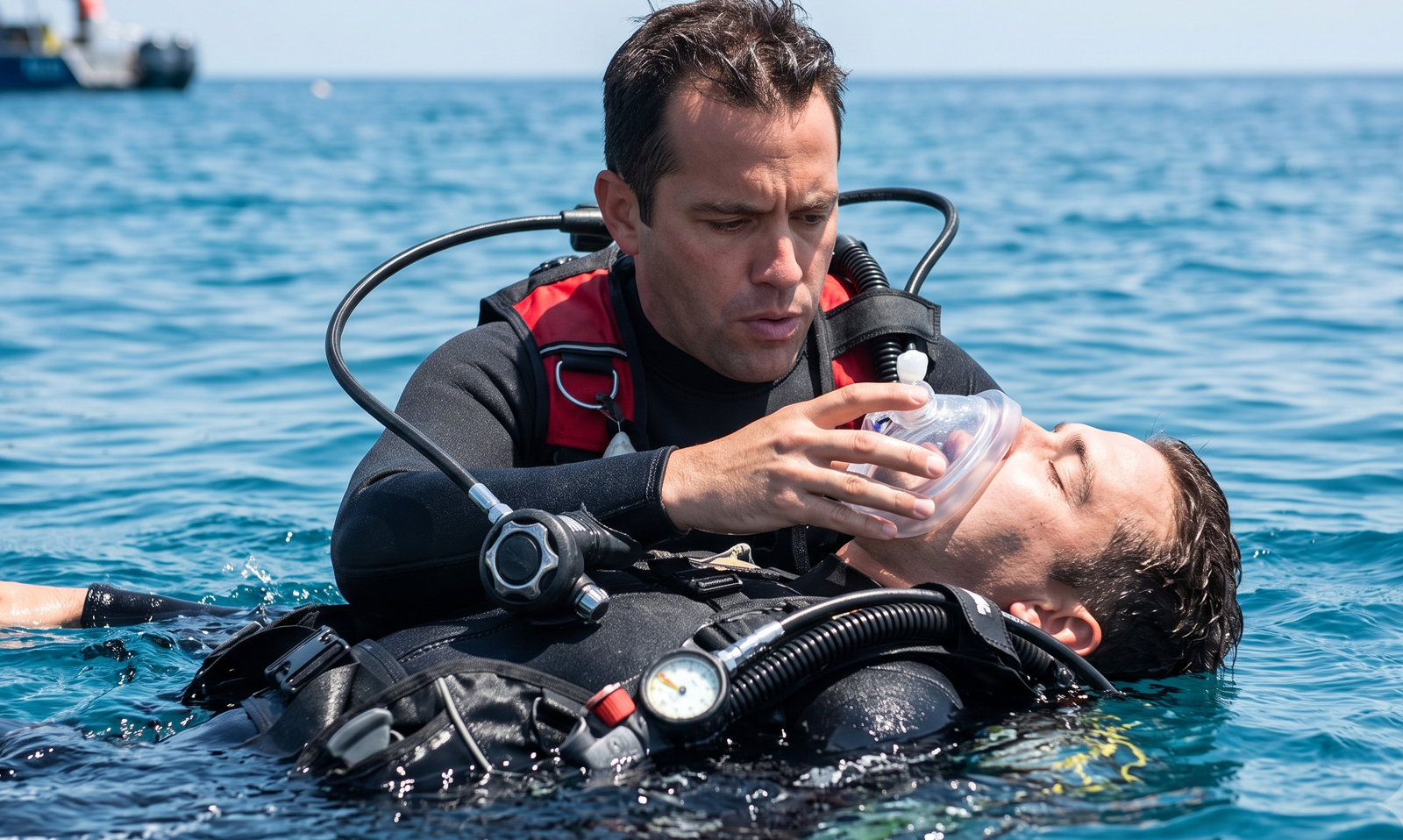
PADI Rescue Diver
| Service | Price | Online |
|---|---|---|
| Rescue Diver course | 425 € | 382,50 € |
From this training you will emerge not just as a better diver, but as a confident, self-reliant ocean leader and the ultimate buddy everyone in the sea wants by their side.
| Service | Price | Online |
|---|---|---|
| Rescue Diver course | 425 € | 382,50 € |
Ready to step up your underwater safety skills? Here is a quick breakdown of the training schedule, prerequisites, and certifications for the PADI Rescue Diver program:
⏱️ COURSE DURATION: 2 to 3 Days (Combining flexible independent theory with practical ocean rescue drills).
🎂 MINIMUM AGE: 12 years old (Divers aged 12–14 earn a PADI Junior Rescue Diver certification).
🌊 IN-WATER SESSIONS: 10 Rescue Exercises + Final Open Water Scenarios conducted from the shore and our dive boats.
🔏 PREREQUISITES:
⏳ CERTIFICATION VALIDITY: Lifelong. Your PADI Rescue Diver credential never expires, though keeping your first aid skills refreshed every 2 years is highly recommended.
🤿 WHAT'S FULLY INCLUDED:
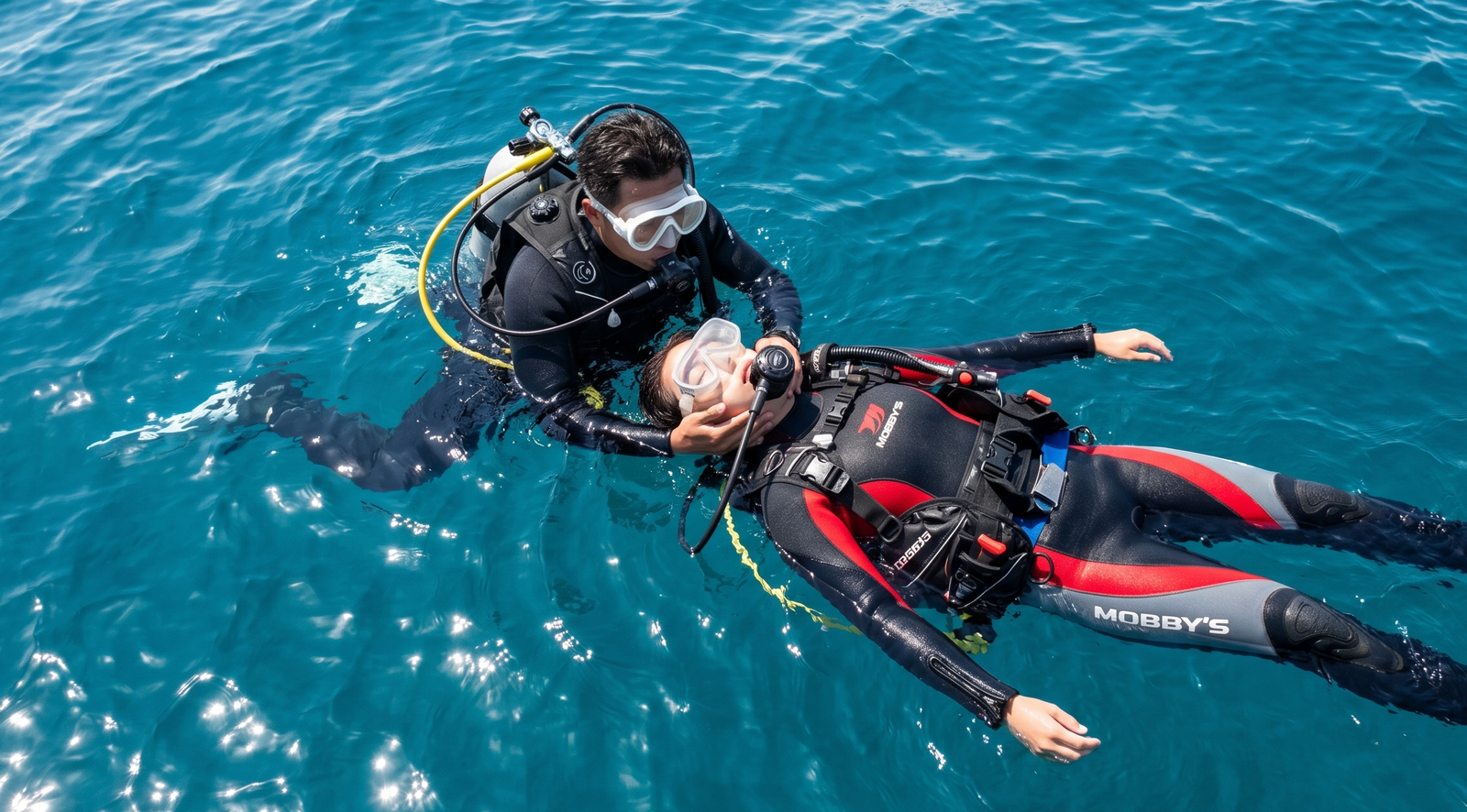
You complete all your theory, videos, and quizzes online at your own pace before arriving, keeping your time in Tenerife entirely focused on practical diving.
You hit the ocean with our instructors to break down and practice isolated safety protocols—including managing panicked divers, underwater search patterns, bringing up unconscious divers, and administering emergency oxygen.
You put everything together. Our instructors stage realistic, unscripted emergency simulations where you must step up, take command, organize a rescue team, and manage the situation from the initial underwater search to the final medical handover on shore.
💡 Curious about what to expect? Check out our blog post, PADI Rescue Diver Course Structure: The Blueprint of a Lifesaver, to see exactly how we build your skills day by day.
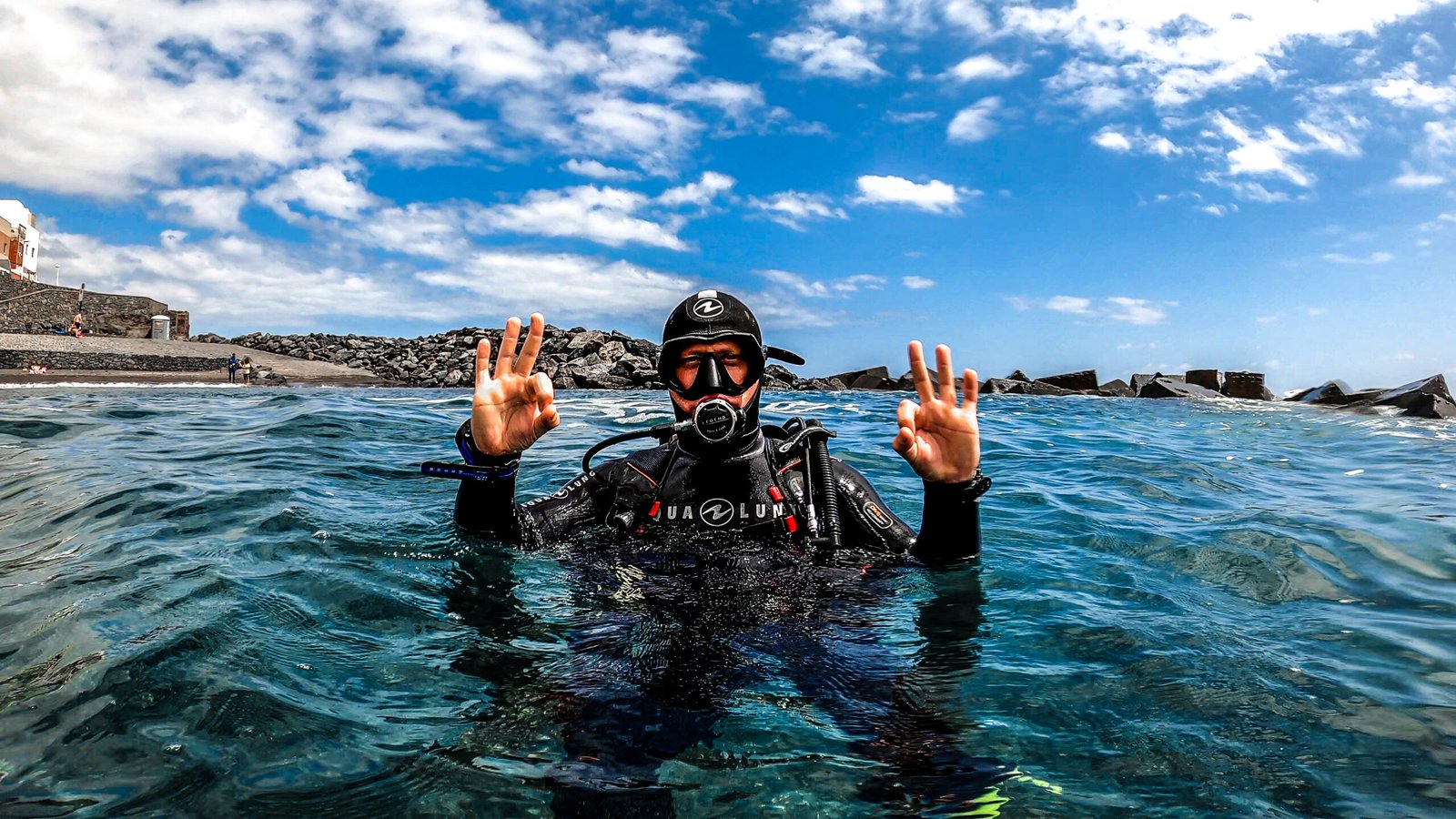
🤿 Choosing where to complete your Rescue Diver certification is about more than just finding a dive center—it's about choosing the team you trust to build your emergency instincts.
At Diving Atlantis in southern Tenerife, we transform what could be an intimidating or stressful program into an exceptionally empowering, high-energy, and memorable experience. Here is why divers choose to master their rescue skills with us:
We don't limit your rescue training to a calm, flat swimming pool. True rescue confidence comes from learning in the environment where you actually dive. Training along Tenerife's dramatic volcanic coastline means you will practice managing boat exits, navigating mild Atlantic currents, and organizing rocky shore extrications. When you graduate here, you know your skills work in the real ocean, not just in a pristine pool.
Our safety-certified instructors are highly experienced dive professionals who manage real ocean safety logistics every single day. They know that stress freezes the brain, so they don't use high-pressure, militaristic boot-camp teaching methods. Instead, they foster a supportive, team-focused environment. We teach these critical, life-saving protocols through engaging, high-energy drills and realistic roleplay scenarios that keep you laughing while building deep muscle memory.
In a rescue scenario, split-second communication is everything. To ensure you understand every tactical concept, safety brief, and radio protocol perfectly, we offer the course across a wide range of languages. You can complete your interactive PADI eLearning and train directly with an instructor fluent in English, Spanish, French, Italian, Polish, or Russian.
Are you planning to make the leap from recreational diver to dive professional? Because our Tenerife center runs daily excursions and certifications across all recreational and professional levels, we coordinate your Rescue training perfectly with your preceding EFR (First Aid) course or your subsequent PADI Divemaster internship. We handle the paperwork and progression seamlessly so you can focus entirely on your leadership skills.
Dive into our blog article Would You Know How to Save Your Dive Buddy?, to explore your next big adventure.
Completing your PADI Rescue Diver certification is a massive milestone—it shifts how you dive and how the diving community views you. But your journey doesn't stop here. The Rescue credential unlocks elite pathways in both recreational mastery and professional leadership.
Here are the exciting routes open to you now:
If you have ever dreamed of turning your passion into a career, traveling the world, and getting paid to dive, this is your next step. The Rescue Diver certification is the ultimate mandatory prerequisite to enter the professional ranks. As a PADI Divemaster candidate at Diving Atlantis, you will work closely with our instructional team, learn to guide certified divers, assist with classes, and manage dive boat logistics. You will transform from an elite buddy into a true ocean leader.
Not looking to go pro, but want to reach the absolute summit of recreational diving? The PADI Master Scuba Diver rating is the "Black Belt" of the scuba world—a prestigious title held by fewer than 2% of divers globally. To earn this elite badge of respect, you need your Rescue certification, a minimum of 50 logged dives, and 5 PADI Specialty certifications.
The extreme self-reliance, problem-solving abilities, and stress-management habits you developed during your Rescue course are the exact foundational skills required for technical diving. If you want to explore beyond the recreational limit of 40 meters, pass through overhead cave environments, or learn to accelerate your decompression using specialized gas mixtures, your Rescue background makes you an ideal candidate for PADI Tec 40 training.
With your heightened safety awareness, you can now pair your Rescue skills with tactical specialties to become an incredibly well-rounded diver:
Search and Recovery Diver: Deepen the search patterns you learned in your Rescue course by mastering complex search grids, knots, and heavy-object lifting bags.
Deep Diver: Safely manage the physiological challenges and safety logistics of diving down to the recreational limit of 40 meters.
Wreck Diver: Learn the safety protocols, line-laying techniques, and propulsion methods required to responsibly penetrate and explore sunken ships.
It is physically challenging and intensive, but it is not a military boot camp! Most divers actually rate it as the most enjoyable course they ever take. The «stress» is completely simulated and controlled. Our instructors at Diving Atlantis focus on building your confidence step-by-step in a highly supportive, fun, and team-oriented environment. You will work hard, but you will laugh a lot along the way.
Your PADI Rescue Diver certification is valid for life and never expires. However, because medical emergency standards change over time, you are highly encouraged to refresh your CPR and First Aid (EFR) skills every 24 months to keep your rescue readiness sharp and legally up to date.
You do not need to be an Olympic athlete, but you should have a reasonable level of physical fitness and comfort in the water. The course involves active surface swimming, towing «injured» divers while wearing full gear, and practicing extractions onto boats or beaches. If you can handle a normal day of active ocean diving, you have the stamina required for this course.
Yes, absolutely! An active CPR/First Aid certification (completed within the last 24 months) is required before PADI can process your Rescue Diver certification. We frequently combine the Emergency First Response (EFR) course with the Rescue Diver program. You will spend one dry day in the classroom mastering CPR, and the next day move directly into the ocean for your rescue training.
The minimum age is 12 years old. Divers between the ages of 12 and 14 earn the PADI Junior Rescue Diver certification. The training and skills are exactly the same as the adult course, but Junior Rescue Divers are automatically upgraded to standard Rescue Divers when they turn 15.
There is no minimum number of logged dives required to start the PADI Rescue Diver course—you simply need to be a certified PADI Advanced Open Water diver (or hold an equivalent qualification from another agency). However, to move on to the next level (PADI Divemaster) afterward, you will need at least 40 logged dives to start.
No, we break everything down progressively. We begin by reviewing self-rescue skills and practicing basic towing or surface releases in calm, shallow water. Only when you feel completely comfortable with the basic physical mechanics do we move deeper into the ocean or onto the dive boats to run full-scale scenarios.
There is no «failing» in the traditional sense. The final scenarios are designed to test your problem-solving under pressure. If a scenario goes wrong, or if you make a mistake, our instructors will pause the drill, debrief with you to discuss what happened, and let you run through it again. The goal is mastery and building muscle memory, not punishment.
The primary focus of every single session is rescue training, which means you won’t be doing typical, relaxed marine-life sightseeing. However, you will spend a massive amount of time underwater practicing search patterns, navigation, and ascents. It is incredibly active diving, and you will see plenty of Tenerife’s volcanic reefs and marine life while executing your drills!
No, Diving Atlantis provides all standard scuba equipment as well as all specialized rescue gear needed for the course—including pocket masks, emergency signaling devices, search lines, and legal medical oxygen kits. If you already own a dive computer or a pocket mask, we highly encourage you to train with your own gear so you become completely familiar with it.