 EN
EN  ES
ES  DE
DE  FR
FR  PL
PL  IT
IT  RU
RU  PT
PT 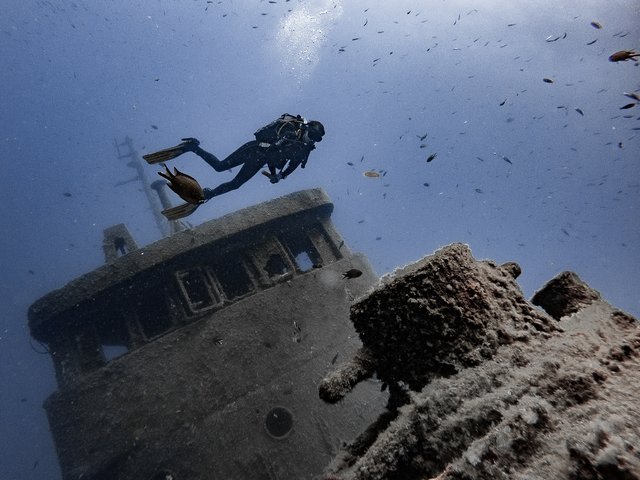
PADI Wreck Diver
| Service | Price | Online |
|---|---|---|
| Wreck Diver specialty | 345 € | 310,50 € |
Sunken history comes alive as you master the advanced navigation, line-handling, and safety protocols required to responsibly explore hidden maritime mysteries.
| Service | Price | Online |
|---|---|---|
| Wreck Diver specialty | 345 € | 310,50 € |
Ready to explore fantastic wrecks? Here is a quick breakdown of the training schedule, prerequisites, and gear requirements for the PADI Wreck Diver program:
⏱️ COURSE DURATION: 2 Days (Combining flexible independent theory with 4 specialized open-water wreck training dives).
🎂 MINIMUM AGE: 15 years old.
🗺️ MAXIMUM DEPTH LIMIT: Dependent on your prior certifications—up to 30 meters (100 feet) for Advanced Open Water divers, or up to 40 meters (130 feet) if you also hold a Deep Diver certification.
🔏 PREREQUISITES:
⏳ CERTIFICATION VALIDITY: Lifelong. Your PADI Wreck Diver Specialty credential never expires and is recognized globally.
🤿 WHAT'S FULLY INCLUDED:
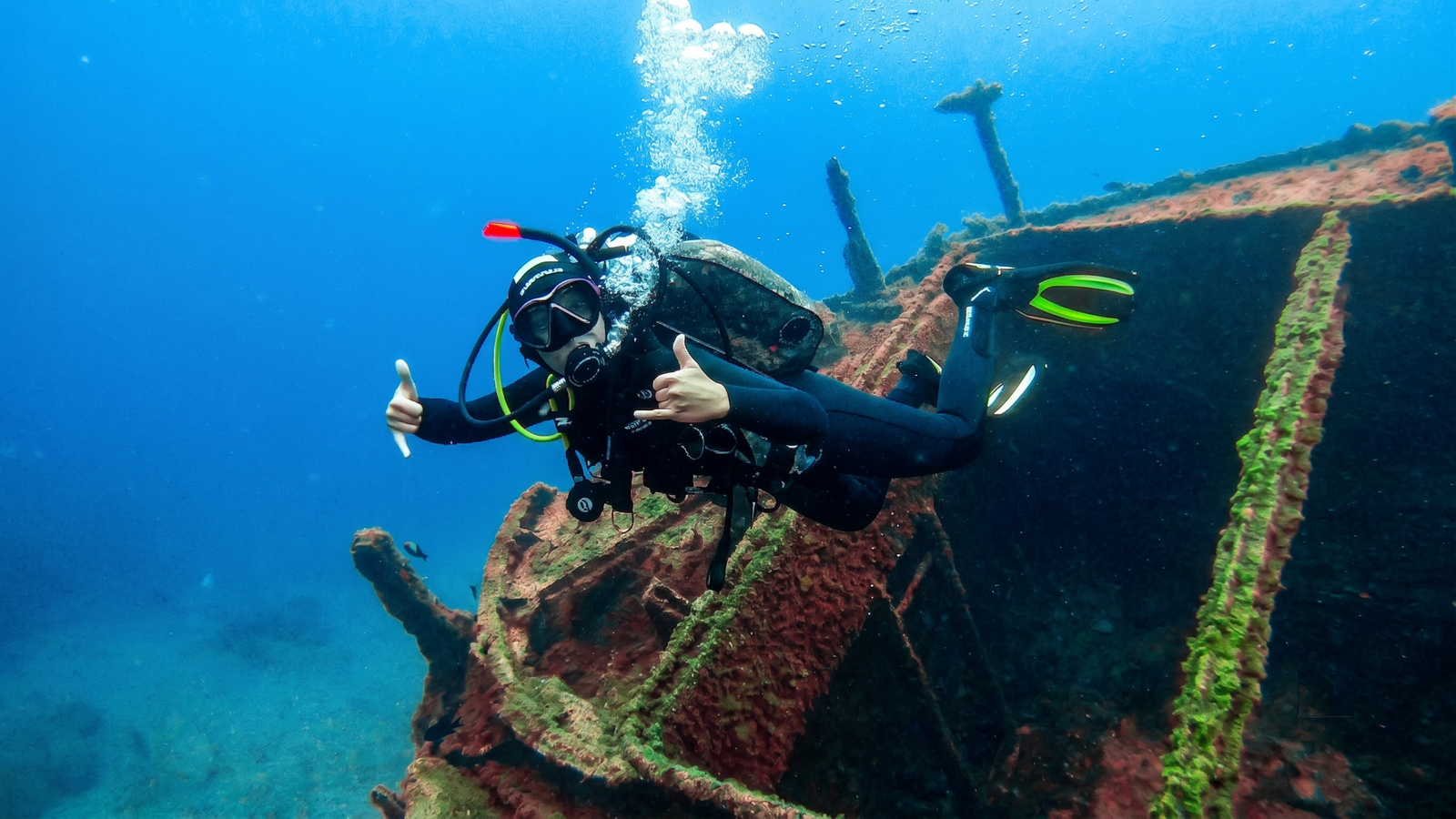
The PADI Wreck Diver Specialty course shifts your focus from open-water swimming to tight, structured navigation inside and around overhead environments. Over 2 days and 4 specialized open-water training dives in Tenerife, you will learn to read a wreck's architecture, manage lines, and execute safe penetrations.
Before boarding our dive boat, you will complete the foundational theory using the interactive PADI digital eLearning app on your phone, tablet, or laptop.
WHAT YOU LEARN: The legalities and ethics surrounding historic wrecks, identifying structural hazards (like overhead collapses or sharp metal), calculating light paths, using penetration lifelines, and the physics of "silt-outs."
THE BENEFIT: You master the conceptual safety rules at your own pace before arriving, keeping your time at our dive center 100% focused on practical water skills.
Before hitting the water with heavy scuba gear, you and your instructor will practice on land. You will walk through the physical mechanics of deploying a wreck reel, tying secure anchor knots (tie-offs), and maintaining line tension while keeping your eyes closed to simulate a zero-visibility environment.
Under the direct guidance of our instructors, you will put your land training into practice across four progressive ocean dives. We have an article on our blog about the Wreck specialty, read it here: Unlocking Sunken History: The PADI Wreck Diver Course with Diving Atlantis
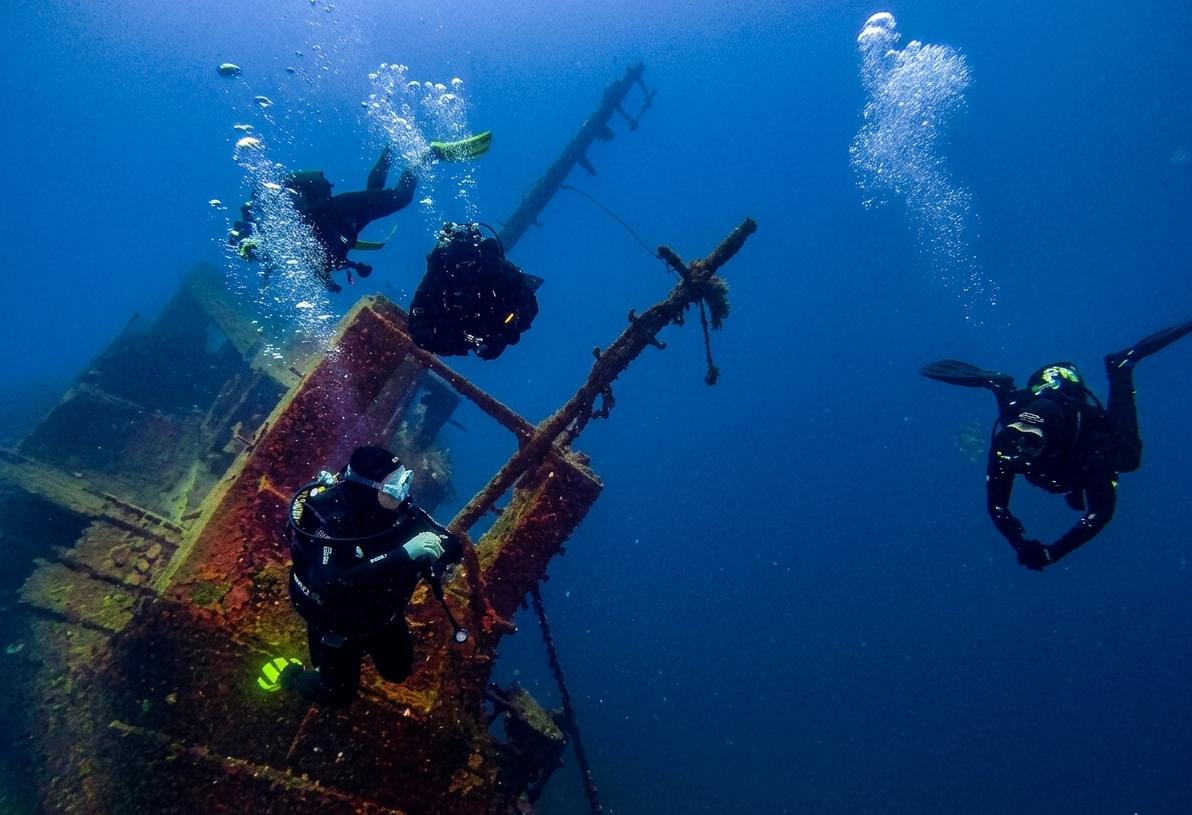
Navigating inside a shipwreck requires precision and absolute trust. Here is why serious divers choose to train with our team in Los Cristianos:
The PADI Wreck Diver certification is a globally recognized badge of respect. Once earned, it pairs perfectly with other advanced courses:
Pair it with the Deep Diver Specialty to unlock historic wrecks sitting between 30 and 40 meters.
Combine it with Enriched Air Nitrox to safely extend your bottom time inside the wreck.
Count it as one of your five milestones toward the prestigious PADI Master Scuba Diver rating.
Yes, absolutely! However, we build up to it progressively. During Dives 1, 2, and 3, you will stay on the outside of the wreck to learn architectural mapping, practice laying safety guidelines, and master propulsion techniques. Once your instructor is completely confident in your buoyancy and line-handling skills, you will execute an actual penetration inside the vessel on Dive 4.
Your PADI Wreck Diver certification is valid for life and never expires. However, it applies strictly to artificial overhead environments (shipwrecks, sunken planes, etc.). It does not certify you to enter natural underwater cave networks or flooded caverns, which require completely separate, highly specialized Cavern and Cave Diving training.
Your safety and comfort are our absolute priorities. Wreck penetration is completely optional; you are never forced into a space that makes you uncomfortable. Our instructors choose wrecks with large, open entry and exit points where natural ambient light is still visible. If you ever feel anxious, a simple hand signal to your instructor will instantly pause or end the drill safely.
Entering an overhead environment without training is highly dangerous. Inside a wreck, you cannot make a direct vertical ascent to the surface in an emergency. Furthermore, without proper «frog kicking» techniques, an untrained diver can cause a sudden «silt-out,» turning clear water into absolute darkness within seconds. This course teaches you how to prevent and manage these specific hazards.
A silt-out occurs when a diver’s fins accidentally kick up the fine sediment and rust that rests on the floor of a shipwreck, reducing visibility to zero. During the course, we teach you tech-diving propulsion styles (like the frog kick) to prevent this entirely. We also train you to navigate safely along a pre-laid guide-line with your eyes closed so you know exactly how to exit by feel alone.
No, Diving Atlantis fully provides all specialized equipment required for your training—including high-intensity primary dive lights, pocket slate boards, and specialized penetration reels/finger spools. If you already own your own dive light or spool, we highly encourage you to bring it so you can become fully comfortable using your personal gear under supervision.
Tenerife offers several excellent sunken structures depending on your certification level and ocean conditions. We utilize various coastal locations, including accessible fishing boats and harbor wrecks in the south, which feature great entry pathways and are packed with local marine life like barracudas, stingrays, and moray eels. Our favourite is the Tabaiba wreck, that we will definitely visit with you on your wreck specialty course. We also dive in Meridiano and el Condesito wrecks. Read our article about wrecks in Tenerife.
The depth of your course dives depends on your existing certifications. If you are a standard PADI Advanced Open Water diver, your training will be conducted down to a maximum of 30 meters. If you also hold a PADI Deep Diver Specialty, we can utilize deeper wreck structures down to the 40-meter recreational limit.
The Rule of Thirds is a strict gas-management protocol used for overhead environments. You allocate one-third of your breathing gas for entering and exploring the wreck, one-third for exiting the vessel completely, and keep the final one-third stored safely in reserve for unexpected emergencies or delayed safety stops.
To start the Wreck Diver Specialty, you must hold a PADI Adventure Diver certification or higher (which means you have completed at least three adventure dives, including underwater navigation). Most students find it best to complete their full PADI Advanced Open Water certification before starting the Wreck course.