 EN
EN  ES
ES  DE
DE  FR
FR  PL
PL  IT
IT  RU
RU  PT
PT Wrecks in Tenerife: Diving into the Secrets of the Island
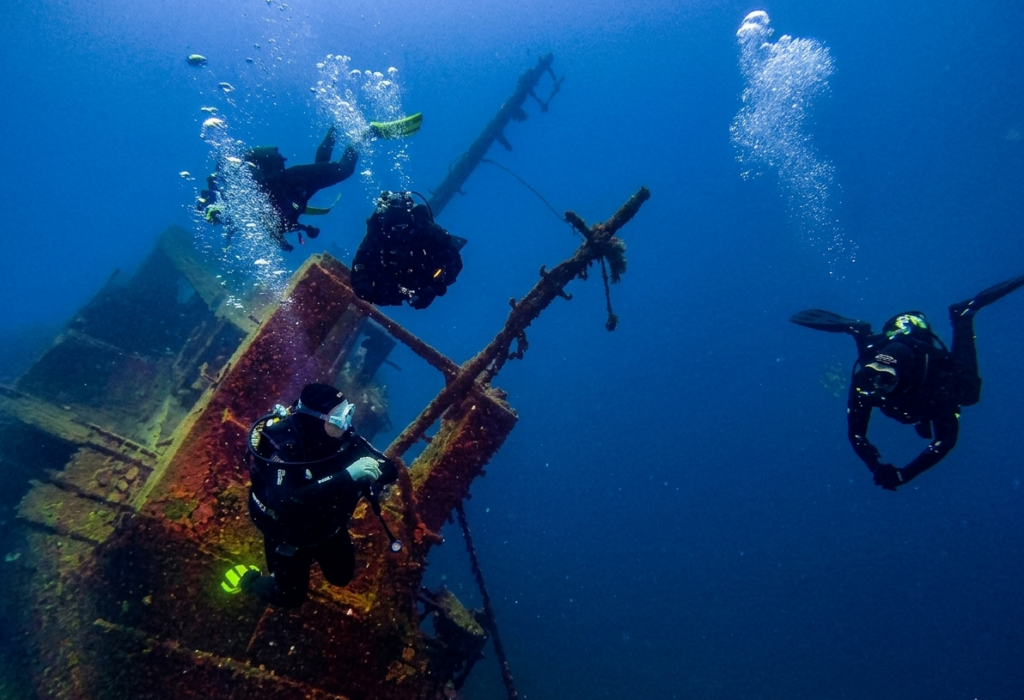
When most people think of scuba diving in Tenerife, they picture its dramatic volcanic geology—the basalt columns, underwater caves, and sweeping black-sand drop-offs shaped by ancient eruptions. But hidden along the coastline of the Canary Islands lies another world entirely: a vast collection of maritime history resting silently on the Atlantic seabed.
From purpose-sunk artificial reefs to tragic maritime accidents, Tenerife’s shipwrecks have become legendary hubs for both advanced divers and thriving marine ecosystems. Protected from severe open-ocean degradation by deep water and clear conditions, these vessels offer some of the finest wreck diving in Europe.
Whether you are looking to complete your PADI Wreck Diver Specialty or simply want to explore history, here is your ultimate guide to the best shipwrecks resting beneath the waves of Tenerife.
1. The El Peñón Wreck (Tabaiba)
-
Depth: 18 to 32 meters (60 to 105 feet)
-
Best for: Advanced Open Water & Wreck Training
-
The Story: Sunk intentionally in 2006 to create an artificial reef, El Peñón was an old tugboat that now rests perfectly upright on a pristine bed of white sand off the northeastern coast. Because it was prepared specifically for divers, its dangerous sharp edges and trap hazards were removed before sinking, making it an incredible classroom for training.
-
The Experience: The visibility here is frequently spectacular, often exceeding 25 meters. As you descend along the mooring line, the entire ship materializes below you like something out of a documentary. The hull is heavily colonized by thousands of trumpetfish, large schools of glassfish shimmering in the engine spaces, and a resident family of large moray eels. Advanced divers can safely peek into the open bridge and main companionways.
2. The Condesito (Anaga / Los Cristianos Coastline)
-
Depth: 6 to 21 meters (20 to 70 feet)
-
Best for: All certification levels (including Open Water)
-
The Story: In 1971, this 30-meter-long cargo ship carrying a massive shipment of beer ran aground on the jagged rocks of Tenerife’s southern coast. While the crew survived, the ship ultimately slipped down the volcanic reef, splitting into sections over decades of winter swells.
-
The Experience: Because the Condesito sits in relatively shallow water, it is flooded with natural sunlight, making it highly photogenic. The hull has broken open in several places, creating a labyrinth of metal frames that are easily explored from the outside. The wreck acts as a massive sanctuary for marine life; the hollow hull sections are completely packed with thousands of Canary damsels, octopuses hiding in the pipework, and large, beautifully colored parrotfish scraping algae off the iron plates.
3. The Meridian Wreck (Los Cristianos)
-
Depth: 30 to 40 meters (100 to 130 feet)
-
Best for: Experienced Advanced, Deep, and Technical Divers
-
The Story: The Meridian is a historic German minesweeper from World War II that later served as a civilian research vessel before finding its final resting place on the sandy ocean floor just outside the harbor of Los Cristianos.
-
The Experience: This is an elite dive that sits right at the recreational limit. Resting deep on the seafloor, the Meridian is frequently swept by currents, which attracts massive pelagic life. As you explore the towering superstructure and the silent decks, it is common to be surrounded by large schools of hunting amberjacks, barracudas patrolling the upper masts, and giant butterfly rays resting on the surrounding sand. It is a hauntingly beautiful, serious dive that demands excellent gas management.
🧬 The «Artificial Reef» Effect: Where Metal Meets Nature
What makes wreck diving in Tenerife truly special is how quickly the Atlantic Ocean reclaims man-made structures. The volcanic rock of the island is relatively barren of nutrients, meaning a sunken steel hull acts like an oasis in a desert.
Within months of a ship sinking, microscopic organisms coat the steel. This attracts small feeding fish, which eventually draw in top-tier predators. When you dive a wreck in Tenerife, you aren’t just looking at rusted iron; you are swimming through a vertical, living ecosystem where every open porthole and hollow pipe serves as a home for angel sharks, groupers, and nudibranchs.
🛡️ How to Explore Tenerife’s Wrecks Safely
Because many of Tenerife’s best wrecks sit below 20 meters and are subject to ocean currents, they require respect and proper preparation.
-
Watch Your Buoyancy: Metal edges can be incredibly sharp, and the sediment inside the hulls can instantly ruin visibility if kicked up. Perfecting a «frog kick» is vital before getting too close.
-
Mind Your Limits: Never attempt to swim underneath a collapsed deck or enter an enclosed hull unless you are specifically certified as a PADI Wreck Diver and are using a dedicated line-and-reel system.
-
Pair with Nitrox: Because deep wrecks give you limited time before your dive computer forces you into a decompression penalty, diving with Enriched Air (Nitrox) is highly recommended to safely extend your time on the bottom.
⚓ Ready to Step Inside History? Don’t just look at the island from the surface. Book your next wreck excursion or enroll in the PADI Wreck Diver Specialty with Diving Atlantis in Los Cristianos. Book your training online today to secure an automatic 10% online booking discount and unlock the silent secrets of the Canary Atlantic!
