 EN
EN  ES
ES  DE
DE  FR
FR  PL
PL  IT
IT  RU
RU  PT
PT 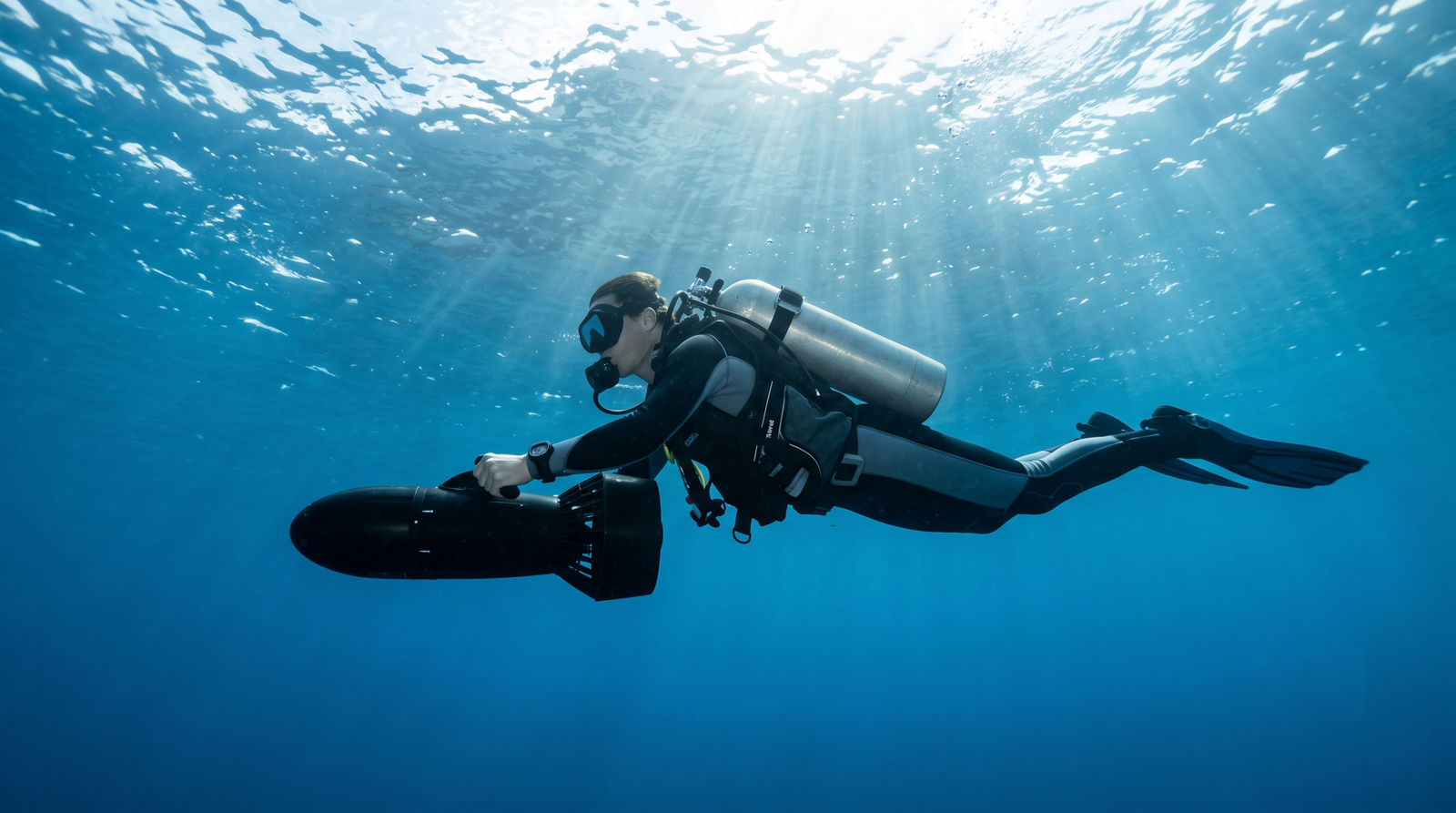
PADI DPV Diver
| Service | Price | Online |
|---|---|---|
| Course DPV Diver, certificate PADI | 350 € | - |
Effortlessly glide through ocean currents and multiply your exploration range along Tenerife’s vast volcanic reefs while drastically reducing your air consumption with the PADI DPV Diver course at Diving Atlantis in Los Cristianos.
| Service | Price | Online |
|---|---|---|
| Course DPV Diver, certificate PADI | 350 € | - |
Ready to experience underwater flight? Here is a quick breakdown of the training schedule, prerequisites, and equipment details for the DPV (Underwater Scooter) Specialty at Diving Atlantis:
⏱️ COURSE DURATION: 1 Day (Includes flexible digital home study and 2 specialized ocean training dives).
🎂 MINIMUM AGE: 12 years old.
🗺️ DEPTH LIMITS: Dependent on your current certification level (up to 18 meters for Open Water Divers or 30 meters for Advanced Open Water Divers).
🔏 PREREQUISITES:
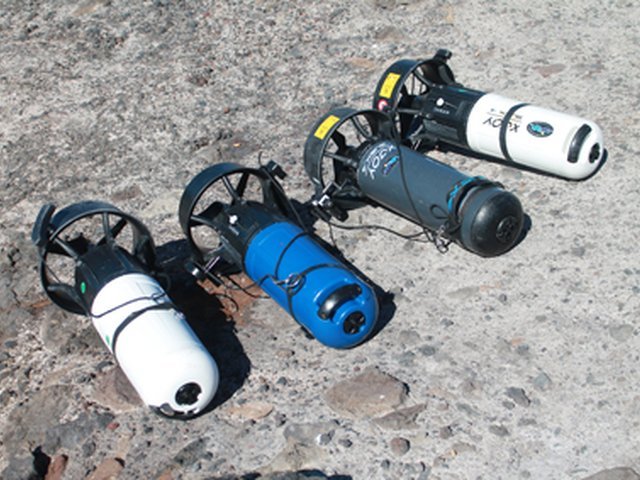
🛸 THE EQUIPMENT: You will train on professional, high-performance underwater scooters, learning proper throttle control, torque management, and battery safety.
⏳ CERTIFICATION VALIDITY: Lifelong. Recognized globally, allowing you to rent high-speed DPVs at dive destinations worldwide.
🤿 WHAT'S FULLY INCLUDED:
🚀 READY TO UPGRADE YOUR SPEED? Don't just swim when you can fly. Book your PADI DPV Diver Specialty course online with Diving Atlantis in Los Cristianos today and automatically claim your 10% online booking discount!
Transition from standard swimming to high-speed marine flight over 1 day and 2 specialized ocean dives in Los Cristianos:
Complete the interactive theory online before arriving. You will learn DPV mechanics, battery management, runaway motor protocols, and how to prevent depth-change barotrauma at high speeds.
Meet at our Los Cristianos center for a hands-on mechanical orientation. Learn how to inspect waterproof O-rings, test trigger mechanisms, secure harness attachments, and correctly "park" the scooter underwater.
Put your piloting skills into action across two progressive training dives along Tenerife's volcanic coast:
Ready to find out how a top-secret WWII weapon transformed into the ultimate tool for underwater flight? 👉 Click here to read our article in the blog: The History of DPV Diving and discover the wild story behind the evolution of the underwater scooter before you pilot one yourself with our team in Los Cristianos!
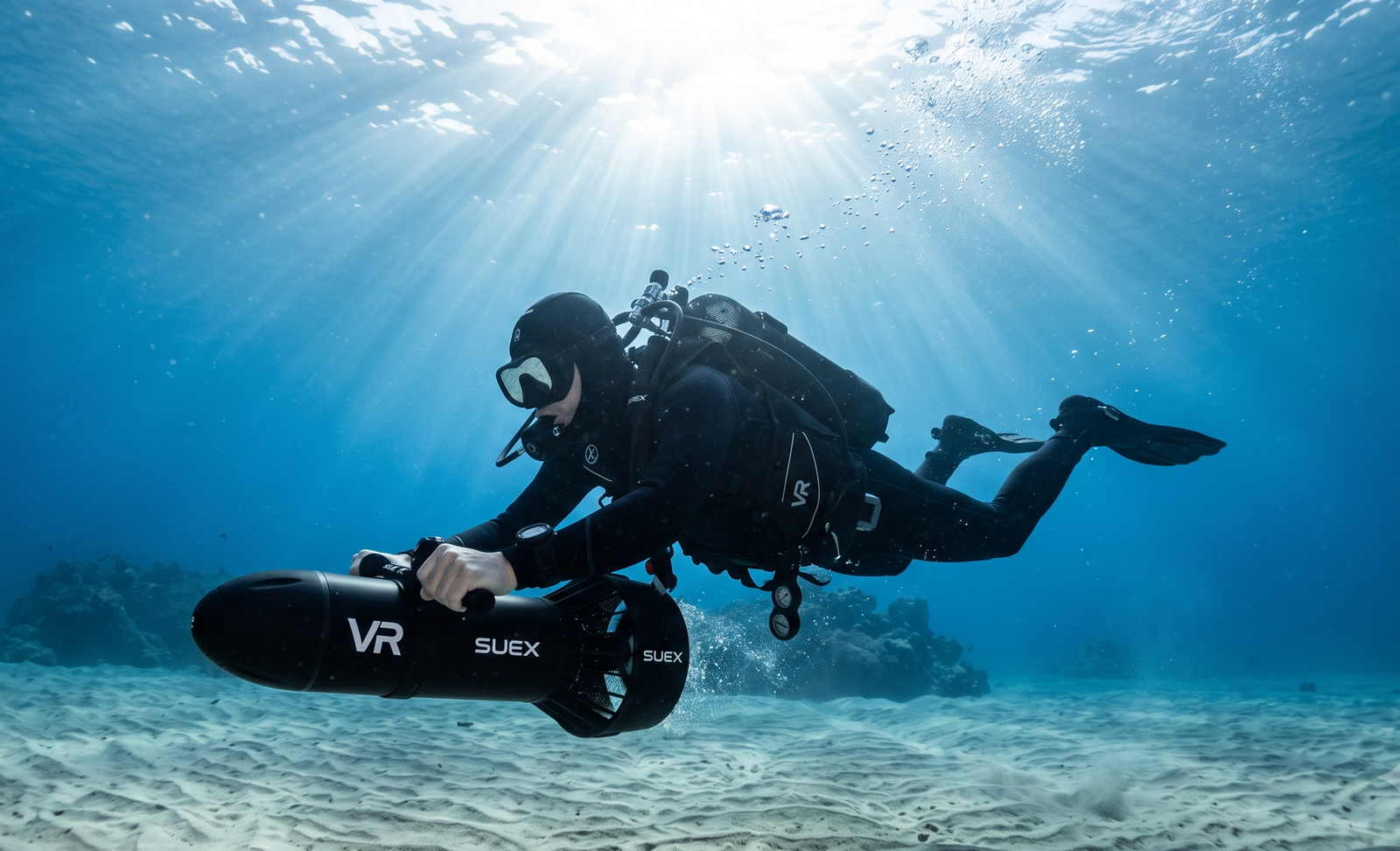
Piloting an underwater scooter is the ultimate thrill, but it requires top-tier equipment maintenance and access to open landscapes to truly appreciate the speed. Here is why Diving Atlantis in Los Cristianos is the perfect place to earn your DPV wings:
We do not use weak, entry-level recreational toys. Our facility maintains a fleet of professional, high-torque DPVs that offer incredible battery life, multiple speed settings, and the reliable thrust needed to zip through open ocean conditions.
The marine topography just in Tenerife features vast sandy plains, massive volcanic drop-offs, and sprawling reef systems. It is the ideal, obstacle-free playground for opening up the throttle and testing long-range navigation.
When you eliminate the physical exertion of kicking, your air consumption drops instantly. Our instructors will show you how to pair our efficient DPVs with your breathing rhythm, allowing you to stay down longer and explore dive sites that are completely unreachable on standard fins.
🚢 READY TO CHANGE THE WAY YOU EXPLORE? Stop swimming and start flying over Tenerife's volcanic reefs. Book your PADI DPV Specialty online with Diving Atlantis today and instantly claim your 10% online booking discount!
Now that you have mastered underwater flight and extended your exploration range, your next step is about combining that high-speed mobility with advanced environments. Here are the best ways to continue your training with Diving Atlantis in Los Cristianos:
A DPV is the ultimate tool for exploring massive shipwrecks. Instead of spending your limited bottom time swimming around a fraction of a hull, an underwater scooter lets you effortlessly cruise the entire length of deep wrecks like Tenerife's Meridian or El Peñón in a single flight.
Deep diving severely limits your No-Decompression Limits and increases your gas consumption due to the high pressure. Because a DPV eliminates all physical kicking effort, your air consumption drops drastically, allowing you to maximize your precious time exploring deep volcanic drop-offs down to 40 meters.
When you are moving through the ocean at high speed, getting disoriented can happen in a flash. This specialty refines your compass accuracy, teaches you complex search grid patterns under power, and ensures you can track your position flawlessly across vast distances.
Not at all. Modern DPVs are highly ergonomic and intuitive. Steering is a lot like riding a bicycle or driving a jet ski—you simply point the nose of the scooter where you want to go, and your body naturally follows the slipstream. Most students master basic handling, straight-line tracking, and smooth turns within the first 15 minutes of water time.
Yes. Reputable dive resorts, centers, and liveaboard boats worldwide require proof of a certified PADI DPV specialty card before they will allow you to rent or operate high-speed scooters. Your digital C-card is recognized globally and never expires.
This is a standard «runaway motor» safety scenario that we practice directly during your course. You will learn multiple safety backups, including how to instantly trigger the manual quick-release clutch, hit the emergency kill switch, or tilt the scooter dynamically to safely break the propeller’s thrust vector until you can disconnect the battery.
It can if you are not careful, which is why depth management is a major focus of your training. You will learn to manipulate the throttle in short, controlled bursts during ascents and descents. You never drive straight down; you glide at a gentle angle, giving your ears plenty of time to equalize comfortably.
No. While it looks like you are holding on with your hands, proper DPV configuration utilizes a specialized «tow-cord» attached directly to the crotch strap of your BCD or harness. The scooter pulls you entirely by this central tow-cord, completely removing any strain from your arms, wrists, and shoulders, allowing you to guide the machine with just fingertips.
Recreational DPVs generally cruise at speeds between 3 to 5 km/h (2 to 3 mph). While that might sound slow on land, underwater it feels like absolute light speed—easily cutting through currents and moving you up to three times faster than standard fin kicking.
You only need to hold a basic PADI Open Water Diver certification (or an equivalent qualification from another agency) and be at least 12 years old. It is an excellent specialty for newer divers looking to build elite spatial awareness and buoyancy habits early on.
Battery life depends on your throttle usage, but our professional fleet at Diving Atlantis features high-capacity batteries designed to easily last between 60 to 90 minutes of continuous trigger time. This gives you more than enough juice to complete both of your long-range ocean training flights.
Yes! In fact, a DPV is the ultimate remedy for high air consumption. Because the motorized scooter does 100% of the heavy propulsion work, your leg muscles completely relax, your heart rate drops, and your breathing pattern becomes shallow and calm. Most divers find their tanks last significantly longer when piloting a DPV.
Not without advanced specialized training. Operating a motorized vehicle inside an overhead environment requires strict, high-level technical certifications (like advanced wreck or cave penetration). During your recreational DPV course, all flights are strictly conducted in open-water environments to ensure safety.