
 EN
EN  ES
ES  DE
DE  FR
FR  PL
PL  IT
IT  RU
RU  PT
PT The History of the DPV: From Secret Warfare to Underwater Flight
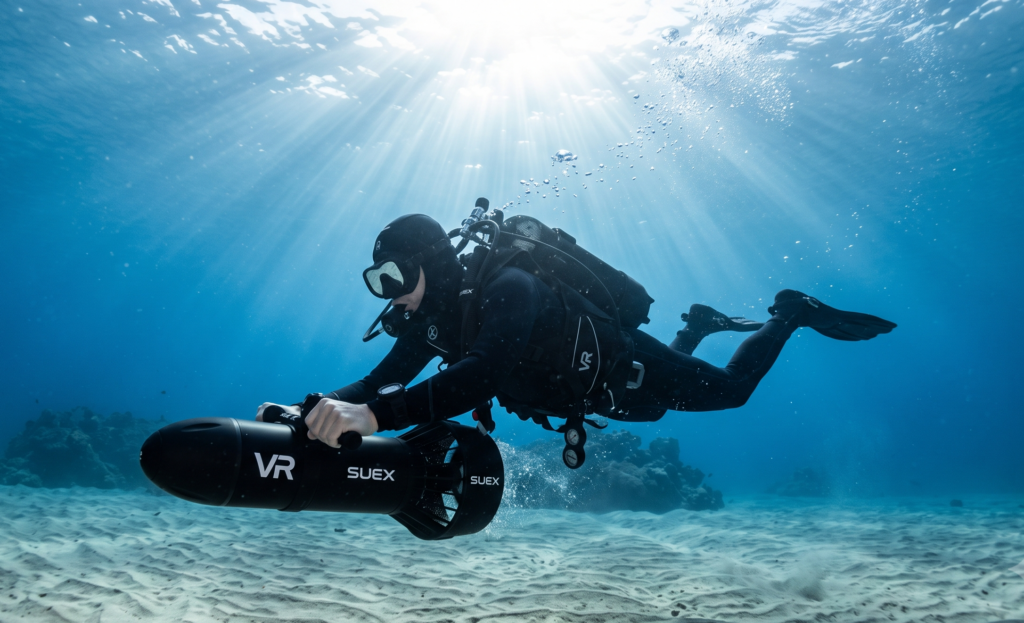
Today, a Diver Propulsion Vehicle (DPV)—often called an underwater scooter—is viewed by recreational scuba divers as the ultimate tool for effortless exploration, high-speed fun, and long-range marine flight. However, the sleek, lithium-powered machines we use today to cruise along the reefs of Tenerife look vastly different from their ancestors.
The history of the DPV is a gripping tale that stretches back nearly a century, rooted deeply in secret wartime espionage, elite military engineering, and the extreme demands of cave and technical exploration.
🇮🇹 1. The Birth of the «Maiale» (World War II)
The true ancestor of the modern DPV was not built for marine biology or recreation; it was designed as a stealth weapon of mass destruction.
In the late 1930s, two Italian naval engineers, Teseo Tesei and Elios Toschi, designed the Siluro a Lenta Corsa (SLC), meaning «Slow Running Torpedo.» Affectionately nicknamed the Maiale («Pig») by its pilots because it was incredibly difficult to steer, this was the world’s first functional ride-on underwater vehicle.
Operated by two elite Italian commandos breathing from closed-circuit oxygen rebreathers, the Maiale allowed divers to sit astride a massive, electrically propelled torpedo. They would sneak into heavily fortified Allied harbors at night, attach the warhead directly to the hull of an enemy battleship, and use the vehicle to slip away undetected before the timer detonated. The success of the Maiale changed naval tactics forever and proved that sub-surface propulsion was a game-changer for diver mobility.
🤿 2. The Post-War Transition (The 1950s & 1960s)
Following the end of WWII, as Jacques Cousteau and Emile Gagnan’s «Aqua-Lung» commercialized open-circuit scuba diving, the civilian world began looking for ways to adapt military technology for scientific exploration and recreation.
In the 1950s, early commercial manufacturers began experimenting with tow-behind scooters, replacing the dangerous ride-on «Pig» configurations. Instead of sitting on the machine, the diver would now hold onto handles at the rear, being pulled through the water in a hydrodynamic line.
During the 1960s, these early recreational DPVs were popularized on the silver screen. Blockbuster movies like James Bond’s Thunderball (1965) showcased dramatic underwater battles featuring frogmen wielding weaponized underwater scooters, cementing the DPV in the public consciousness as the ultimate symbol of high-tech ocean adventure.
🕳️ 3. The Cave and Technical Boom (The 1980s & 1990s)
While recreational divers viewed scooters as a fun luxury, extreme cave explorers in Florida and Europe realized that DPVs were an absolute logistical necessity.
As divers pushed thousands of feet back into tight, pitch-black underwater cave networks, swimming against heavy flows became physically impossible. Kicking not only exhausted the divers—causing dangerously high air consumption—but it also risked kicking up fine silt, causing immediate zero-visibility emergencies.
During this era, pioneering technical groups like the WKPP (Woodville Karst Plain Project) began modifying commercial scooters to build heavy-duty, highly reliable «tow-behind» technical DPVs. These rugged machines allowed explorers to map miles of uncharted underwater caverns by drastically reducing their physical workload, optimizing their gas consumption, and keeping their bodies in perfect horizontal trim.
🔋 4. The Modern Era: Brushless Motors and Lithium Power
For decades, the primary drawback of DPV diving was the weight. Early scooters relied on heavy, bulky lead-acid batteries wrapped in massive aluminum or PVC housings. A diver often needed a crane or a very strong back just to lift a scooter from the dive deck into the water.
The 21st century revolutionized DPV design through two massive technological leaps: Brushless Electric Motors and Lithium-Ion Batteries.
Modern DPVs are ultra-lightweight, highly compact, and incredibly powerful. They feature variable speed throttles, intelligent battery management systems that calculate burn times down to the minute, and safety clutches that instantly disengage if the trigger is jammed. What once required a team of military engineers can now be easily lifted by a 12-year-old student off the dive boat.
🌊 Experience History in Flight with Diving Atlantis
When you pull the throttle on a professional underwater scooter today, you are utilizing technology that was forged in the fires of wartime espionage and refined by the world’s most daring cave explorers.
At Diving Atlantis in Los Cristianos, our PADI DPV Diver Specialty course bridges the gap between this historic engineering and modern recreational fun. You will learn to pilot these incredible machines safely along Tenerife’s volcanic highways, experiencing the exact same sensation of weightless, high-speed flight that generations of divers worked to perfect.
🚀 Ready to join the ranks of underwater pilots? Book your PADI DPV Diver course online with Diving Atlantis today and secure your automatic 10% online booking discount!
